
Roofing
Roofing Tear-Off Dumpster Sizing Guide
How to size a dumpster for a roofing tear-off in Bridgeport, CT — by roof square footage, layer count and shingle type. Call (475) 244-1722.
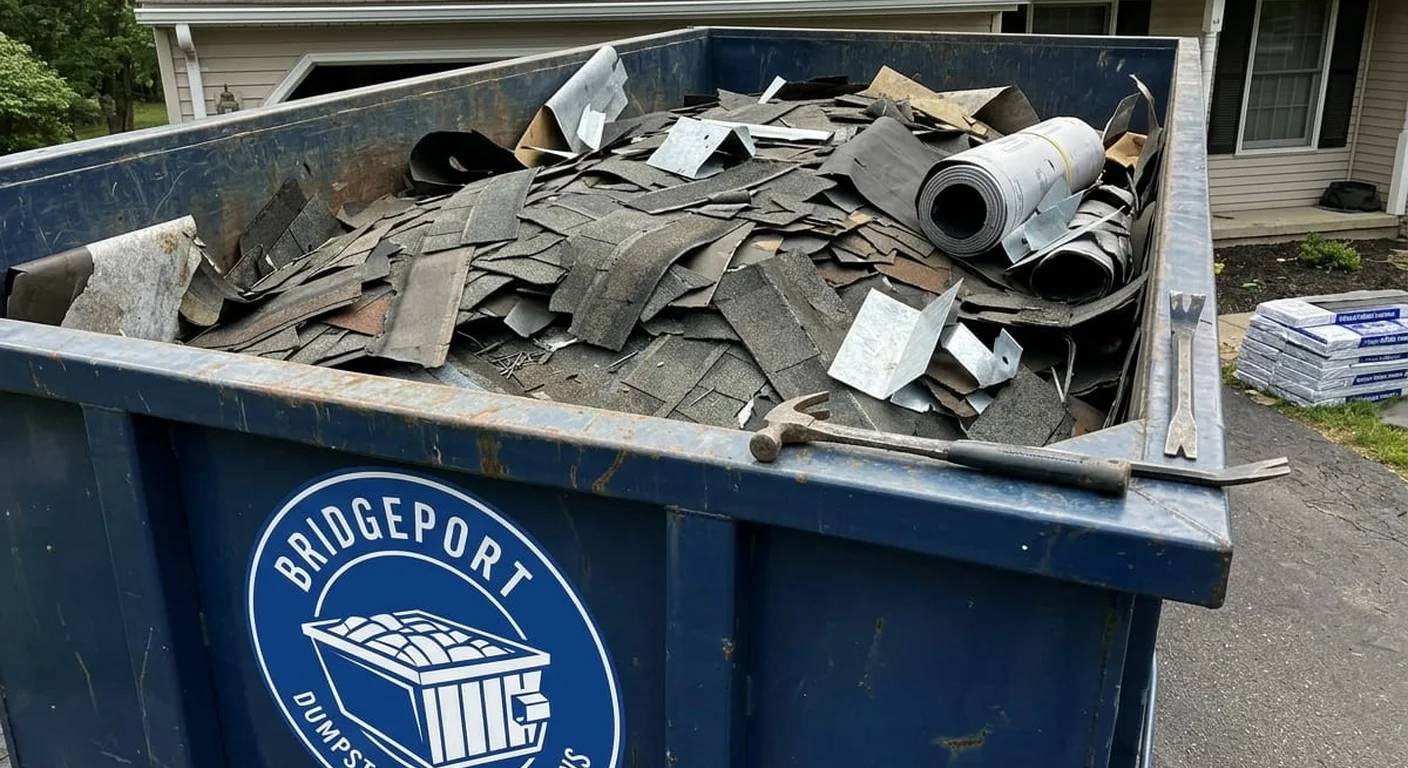
Roofing debris is one of the trickiest things to size correctly, because it's a weight problem disguised as a volume problem. A tear-off pile can look modest sitting on a tarp in the yard, but shingles are dense, and the actual weight often surprises people who are used to thinking about dumpster sizing in terms of how big a pile looks.
Why shingles are heavier than they look
A single square (100 square feet) of standard asphalt shingles weighs roughly 200 to 400 pounds depending on the shingle type and how many layers are being removed. A typical single-family roof might be 20 to 30 squares, which adds up to a genuinely heavy load well before it looks like it's filling a large container.
Sizing by roof size and layers
| Roof size (squares) | Single layer | Two layers |
|---|---|---|
| Up to 15 squares | 10 yard | 15 yard |
| 15-25 squares | 15 yard | 20 yard |
| 25-35 squares | 20 yard | 20-30 yard |
| 35+ squares | 20-30 yard | 30 yard |
These are starting points, not guarantees — shingle type, how many layers are actually coming off, and whether the old roofing has absorbed moisture all shift the real number. If you're not sure how many layers are on your roof, a roofing contractor can typically tell in a few minutes.
Wet shingles weigh more
Shingles that have been sitting exposed through a rainy stretch, or a tear-off happening right after a coastal storm, will weigh noticeably more than the same material dry. If your project is timed around wet weather, mention it when you book — we'd rather size up slightly than have the container hit its weight allowance before the tear-off is finished.
Multiple layers
Many older homes in Greater Bridgeport have two or even three layers of shingles from past reroofing jobs that didn't fully tear off the previous layer. Each additional layer adds real weight, and it's worth confirming layer count with your roofer before booking so we size correctly the first time.
Placement for a roofing job
Roofing debris usually gets thrown or slid directly off the roof into the container, so placement close to the house — and directly beneath the section of roof being worked — matters more here than for most other project types. Tell us where the work is happening on the house and we'll position the container to minimize how far material has to be carried.
Tarps and driveway protection
Beyond the dumpster itself, most roofing crews lay tarps around the container and the immediate work area to catch stray nails and debris. We lay driveway protection boards under the container's rails on every residential drop as standard, but the roofer's own tarps are a separate, important layer of protection for the rest of your property.
What else typically comes off during a tear-off
Along with shingles, expect underlayment, flashing, and sometimes damaged decking or sheathing if the roof deck needs repair. All of this can generally go in the same container as the shingles, but flag any decking replacement specifically since wood adds bulk without adding as much weight as shingles.
Planning a roofing tear-off? Call (475) 244-1722 and tell us your roof's square footage and layer count, and we'll size it correctly the first time. See our full size guide for dimensions and weight allowances.
Need a container in Bridgeport or anywhere in Greater Bridgeport? Call (475) 244-1722 and describe the job. We will name the size, the flat rate and a delivery slot — often the same day. No forms, no waiting on an email.